Research Report
Samsung Electronics (005930 KS/Buy)Increasingly favorable environment
- Author Young-gun Kim
- Date Fri Jan 30 00:00:00 KST 2026
- Stock Code 005930
- File 20260202_Samsung Electronics (005930 KS_Buy).pdf
Increasingly favorable environment
Memory business entering a full-fledged normalization phase
We lift our target price for Samsung Electronics (SEC) by 30% to W247,000 (from W187,000). Using a sum-of-the-parts (SOTP) valuation, we estimate the company’s fair value at W1,684tr, including W1,385tr for the memory business. Based on 2026F EPS and BPS, our target price implies a P/E of 11.1x and P/B of 3.1x, both of which remain below the industry averages of 14.4x and 4.2x, respectively.
For 1Q26, we look for revenue of W114tr (+22.5% QoQ) and operating profit of W32tr (+63.8% QoQ). Backed by the full pass-through of rising memory prices, the DS division should see strong growth in both revenue (+35.6% QoQ) and operating profit (+76.7% QoQ), supporting overall earnings. In the MX division, we forecast revenue to rise QoQ following new product launches, while margins are likely to narrow due to higher memory prices.
For 2026, we look for revenue of W499tr (+49.9% YoY) and operating profit of W166tr (+282.4% YoY). We forecast memory operating profit to rise to W149.3tr (+500.9% YoY), driving overall earnings growth. We project that bit growth will reach +24.2% for DRAM and +18.8% for NAND, with ASPs rising 94.8% and 84.3%, respectively, reflecting the full-scale ramp-up of HBM and the robust conventional memory market.
An increasingly favorable business environment
Competitive edge in HBM4: SEC is likely to begin recognizing HBM4 revenue from 1Q26, with the company reporting that its samples progressed through a customer’s qualification test without requiring redesign. Management also indicated that while the market for 16-layer chips utilizing hybrid bonding technology has not yet fully opened, the firm has already secured mass production capabilities. Accordingly, we expect HBM revenue to surge from US$7.3bn in 2025 to US$17bn in 2026 (+130% YoY).
Industry-leading capacity: At present, the strongest demand is in server DRAM. In addition, each new CPU generation from Nvidia is seeing roughly a doubling of LPDDR5X content, while demand for SSDs used for KV-cache offloading is driving a widening price premium for TLC over QLC. SEC has historically held strengths in all of these segments, and its industry-leading capacity should help it to maximize earnings.
Foundry?memory synergies: SEC has begun shipping HBM4 base dies fabricated on its 4nm FinFET process. While this is not the most advanced node available, it is encouraging that the firm has secured stable high-volume yields and built a collaborative business model between its foundry and memory divisions. The 2nm process is expected to be applied starting with custom base dies for HBM4E (scheduled for 2027), at which point foundry-memory synergies should materialize in earnest.


Contact Us
- Office number1588-6800
-
- Investor Relationsirteam@miraeasset.com
- Human Resourcerecruit@miraeasset.com
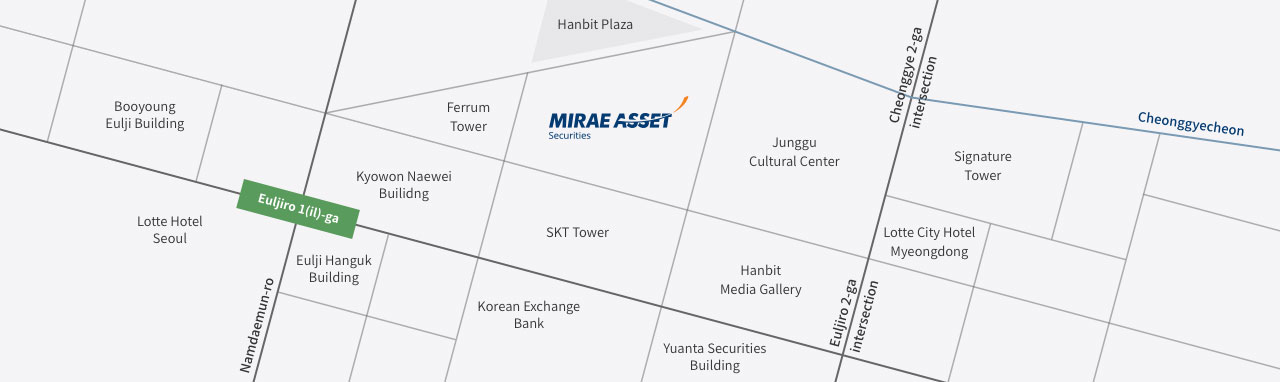
- AddressMirae Asset CENTER1 Bldg, East Tower, 26, Euljiro 5 gil, Jung-gu, Seoul 100-210
Korea (Headquarters)
Greece
Luxembourg
- Mirae Asset Global Investment(SICAV)
Mongolia
USA
- Mirae Asset Securities &
Investments Mirae Asset Securities(NY)
- Mirae Asset Global Investments
- Global X
- Mirae Asset Capital Life Science
- Wealthspot
Vietnam
- Mirae Asset Securities
- Mirae Asset Finance Company
- Mirae Asset Prevoir Life Insurance
- Mirae Asset Global Investments
- Vina Digital Finance Platform
- Grooo International Joint Stock
Company Mirae Asset Alternative
Invetment VietnamMirae Asset Securities
- Ho Chi Minh representative Ofiice
Brazil
Singapore
United Arab Emirates
Mirae Asset Investment Managers
- Dubai representative Office
Ireland
United Kingdom
India
Indonesia
Japan
China
- Mirae Asset Huachen Fund
Management Mirae Asset Investment
Management(Shanghai)Mirae Asset Securitires
(Beijing representative Office)Mirae Asset Securitires
(Shanghai representative Office)
Canada
Colombia
Australia
Hong Kong SAR*
Germany
Global X ETFs - Germany Rep Office
Italy
Global X ETFs - Italy Rep Office
* Special Administrative Region of the People’s Republic of China